Mardin ·
Mardin: a staircase of stone above the plain
Mardin is one street long and a hillside deep, a terrace of beige limestone stepping down towards the Mesopotamian plain with the citadel holding the ridge above it. Arabic, Kurdish and Syriac have all been spoken here, and the Artuqid madrasas, the monasteries east of town and the stuffed ribs on the table are what that history left on the ground.
Places
A town of terraces, and the tunnels through it
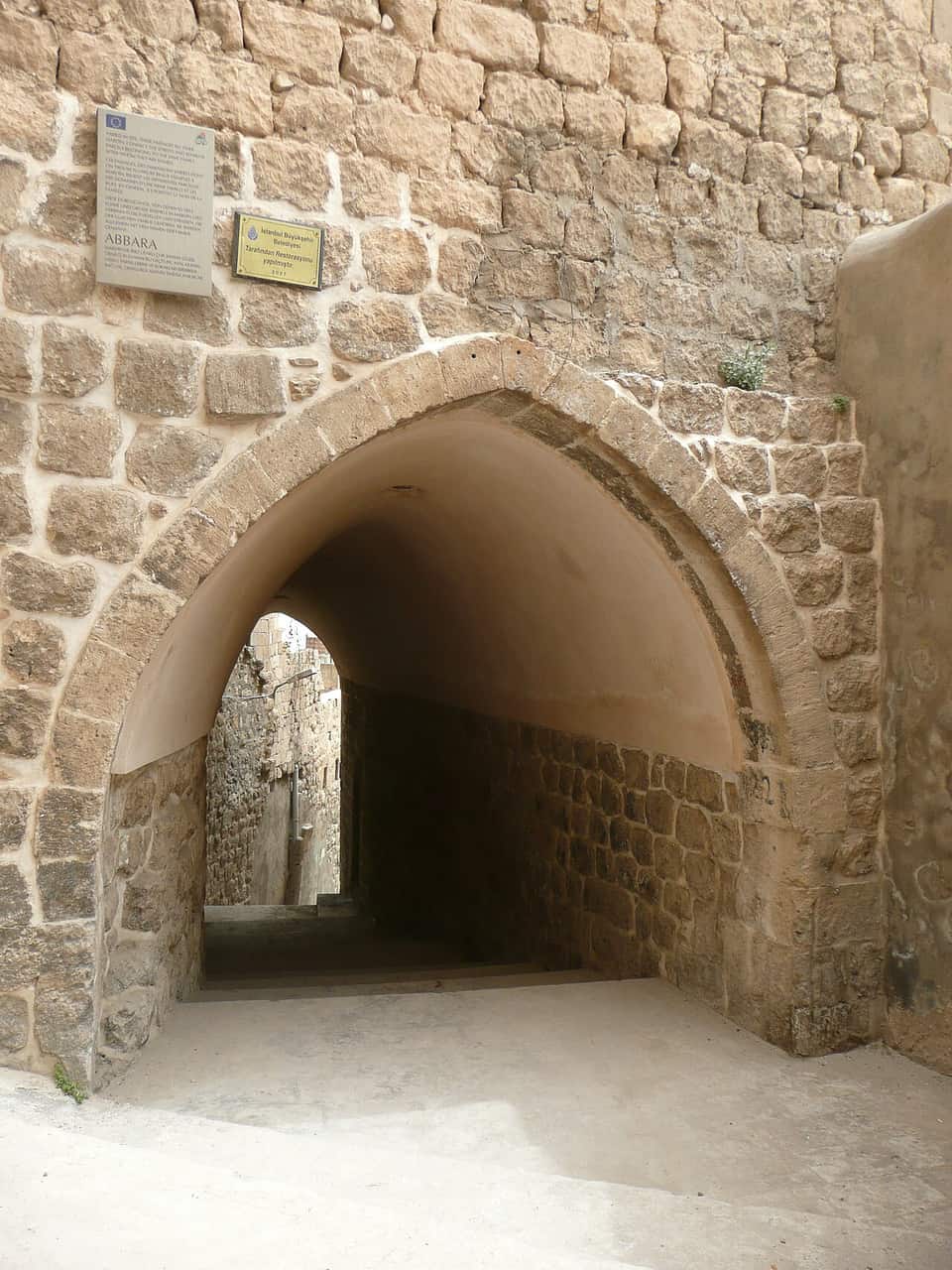
Old Mardin climbs the southern slope of one long hill, so it reads as a stack of terraces rather than a grid, with the citadel on the ridge and the Mesopotamian plain below. Mosque and house alike are cut from the same beige limestone, and the houses turn inward around courtyards. Where a lane had to pass beneath a building, the builders vaulted it, and these tunnels are called abbaras. The provincial tourism office counts them among Mardin's most distinctive structures, thickest in Savurkapı and also found in Teker, Şehidiye, Medrese and Gül. Use them: they are the shortcuts between levels.
Sources: en.wikipedia.org · mardin.ktb.gov.tr
The Great Mosque, and what survived of it
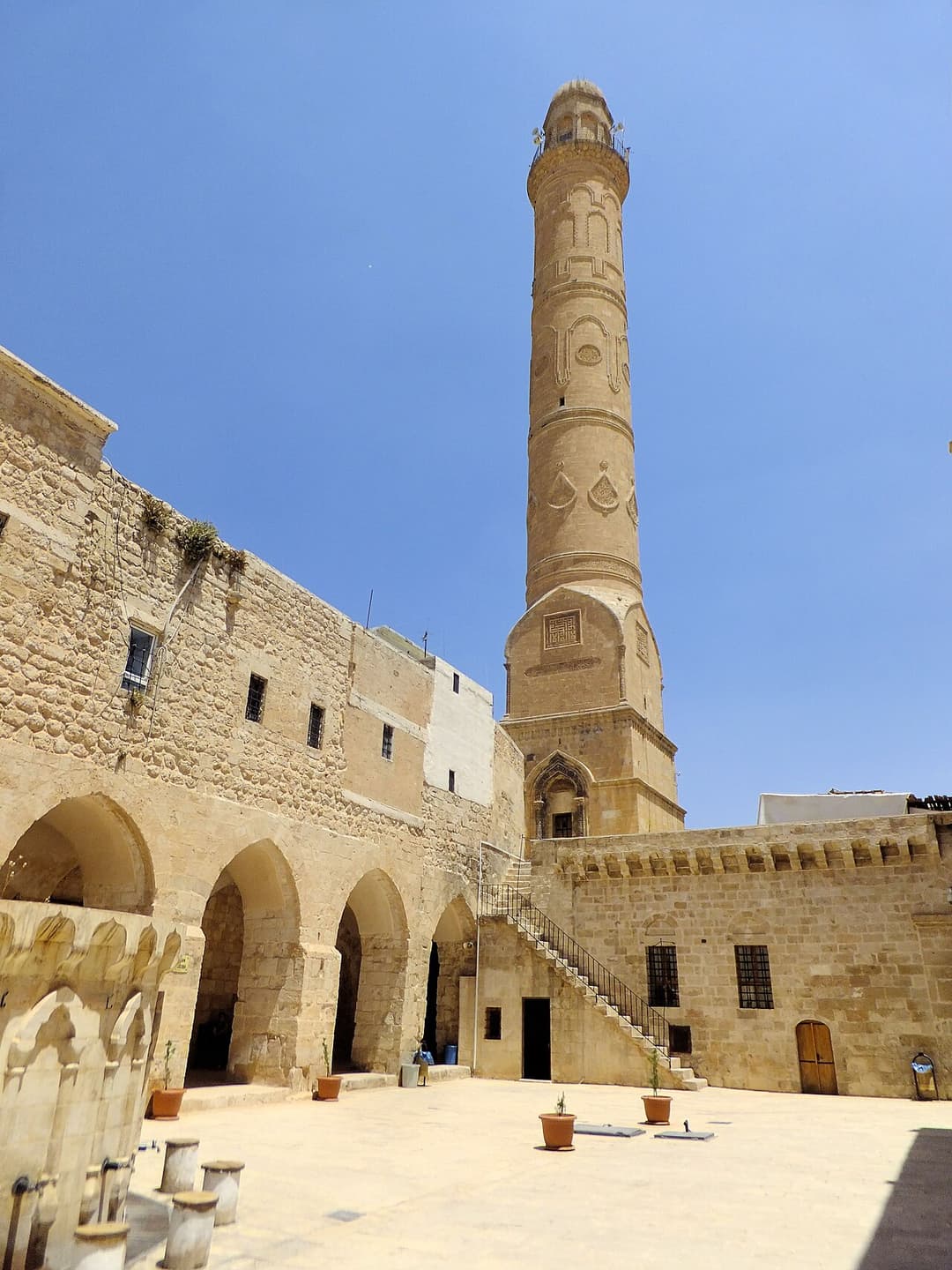
An inscription on the minaret is dated 1176 and credits the Artuqid ruler Kutbettin Ilgazi II; a second, in the courtyard, dates a later phase to 1186. Little of that building is still standing. It was damaged in the Timurid invasions and then destroyed in the fighting of 1833 to 1835, when Reşid Mehmed Pasha put down the Milli tribe, so most of what you walk into is a rebuilding. Two things are Artuqid: the north wall and the carved wooden minbar. The fluted minaret above the rooftops you will keep meeting from everywhere in town.
Sources: en.wikipedia.org
Zinciriye, the madrasa in every photograph
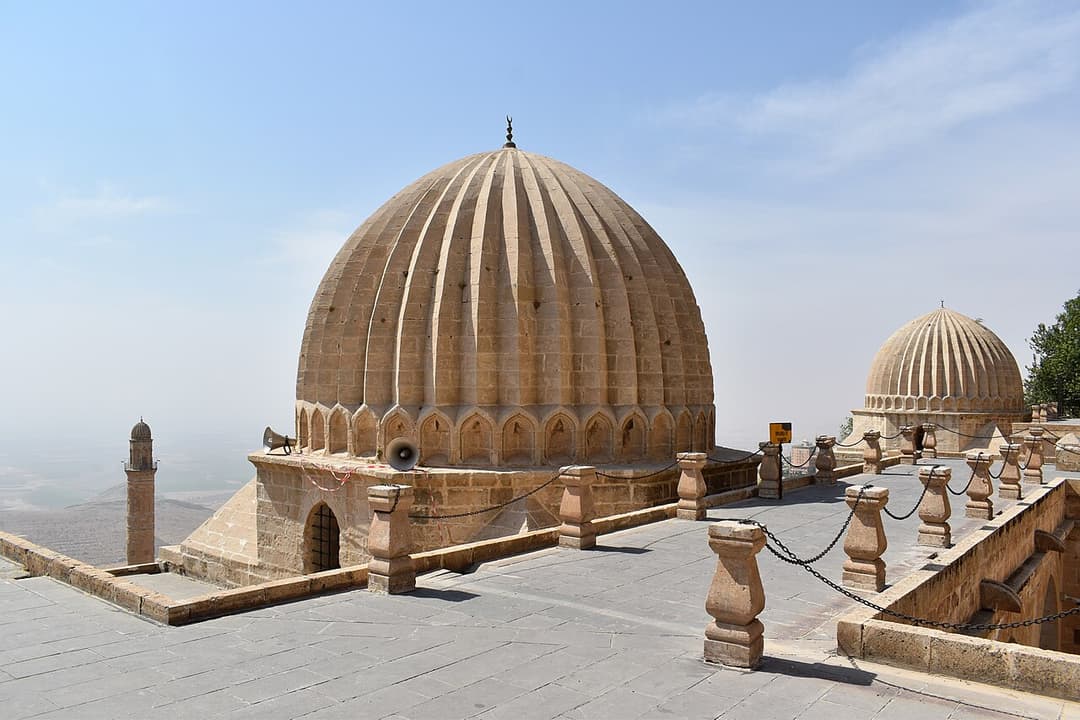
The Zinciriye, properly the Sultan Isa Madrasa, is dated 1385 and was built under the Artuqid sultan al-Zahir Majd al-Din Isa, who ruled from 1376 to 1407. It gathers a madrasa, a mosque and a mausoleum around two courtyards behind a portal carved with muqarnas, and its two ribbed domes are the shape most pictures of Mardin end up framing. The tomb chamber was meant for the sultan; he died in battle and was buried elsewhere. Climb to the terrace and look south, which is what the siting was for.
Sources: en.wikipedia.org
Kasımiye, finished sixty years late
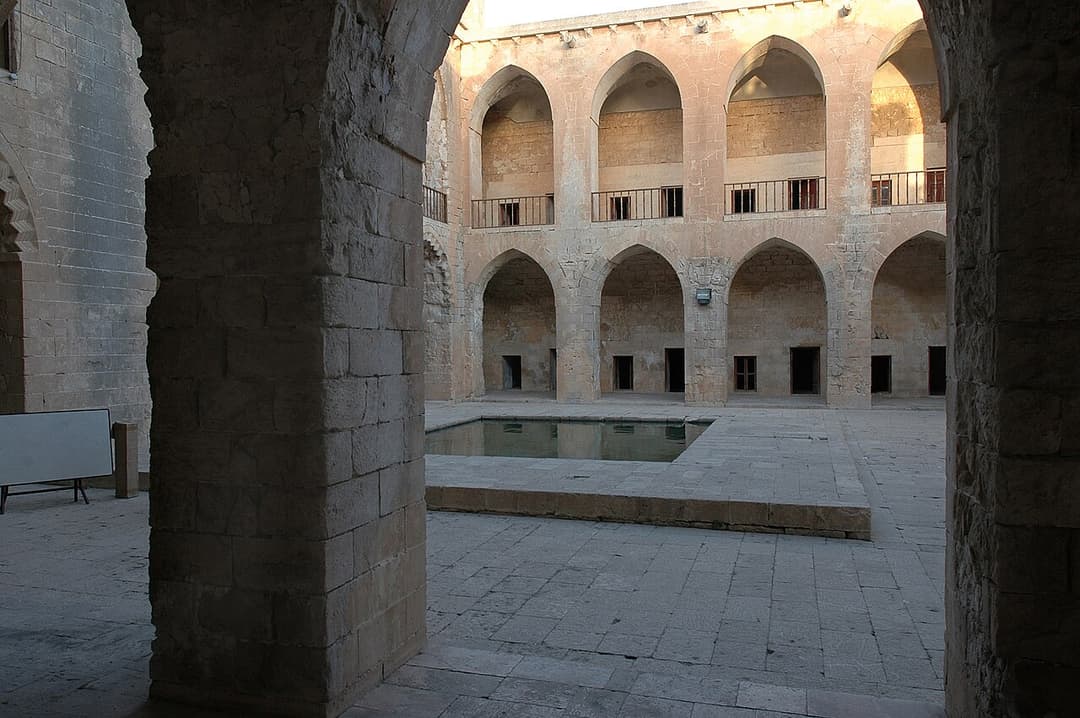
The same sultan began a second madrasa on the western edge of town and left it unfinished when he died in 1407. It was completed in 1445, under Aq Qoyunlu rule, and carries the name of Kasım. Behind a monumental portal lies a large central court with three domes above it and a channel of water running down the middle into a pool. Because it sits apart from the old town, it is usually quiet. Go late in the day, when the stone turns and the courtyard empties.
Sources: en.wikipedia.org
Culture
Deyrulzafaran, eight centuries of patriarchs
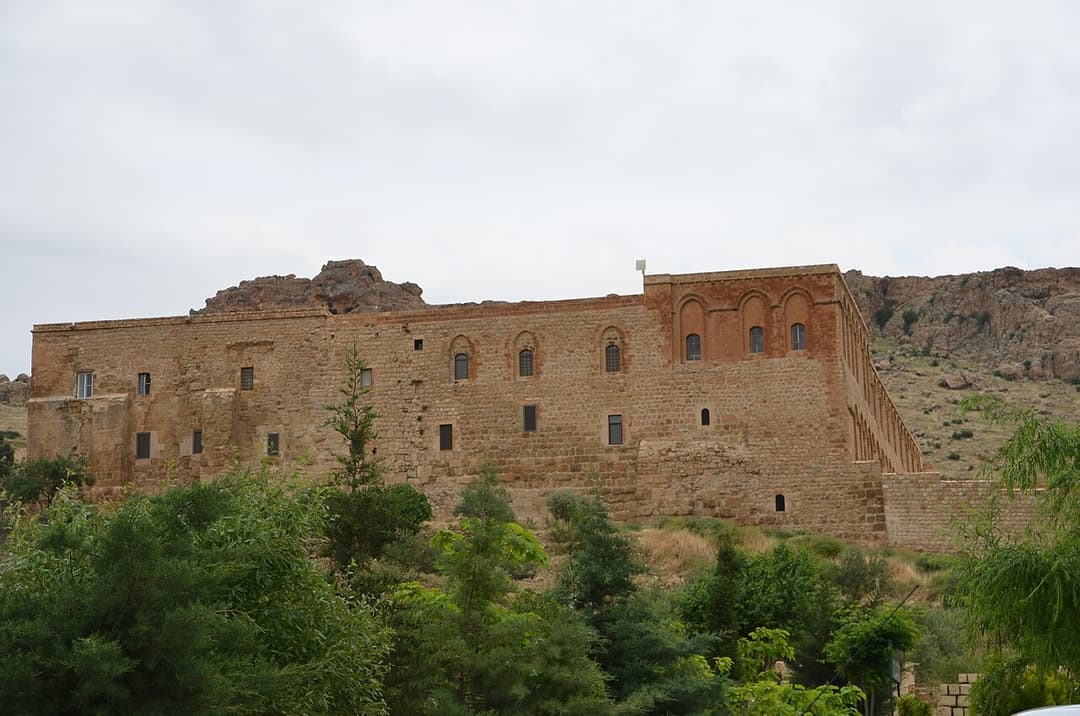
A few kilometres east of the city, the Saffron Monastery stands on ground that held a temple to the sun god Shamash and later a Roman fort. Mor Shlemon made it a monastery in 493, and Ananias, metropolitan of Mardin, bought the ruin and rebuilt it in 793, after which the community grew to about eighty monks. From the eleventh century it housed the Syriac Orthodox patriarchs and remained their seat until the patriarchate left Turkey; sources give that date as 1924 and as 1932. Under the courtyard is an unmortared stone vault with a small opening set to catch the sunrise.
Sources: en.wikipedia.org · en.wikipedia.org
The Church of the Forty Martyrs
Kırklar Kilisesi is the Syriac Orthodox metropolitan church of Mardin, still in use, founded for the saint Behnam and his sister Sarah and serving as the patriarchal church from 1293. The dating is not settled: the national tourism site puts the building in the fifth century, other accounts in the sixth. Its present name comes from 1170, when the relics of forty martyrs were brought here. Inside there is fine stonework around the niche, old wooden doors and a bell tower in the courtyard. Go in quietly; a congregation still meets here.
Sources: goturkiye.com · en.wikipedia.org
Tur Abdin, the mountain of the servants
East of Mardin the land rises into Tur Abdin, which in Syriac means the mountain of the servants of God: a limestone plateau running to the Tigris, with Midyat at its centre. It holds more than eighty villages and close to seventy monastic buildings, and Mor Gabriel, founded in 397, is the oldest Syriac Orthodox monastery still working after Mor Mattai. The language here is Turoyo, a Neo-Aramaic dialect. Its speakers were almost destroyed in 1915 and then thinned by emigration, from some 50,000 in 1975 to about 2,000 in 1999. A few families have come back from Germany and Sweden.
Sources: en.wikipedia.org · goturkiye.com
Food and drink
Kaburga dolması, a rib cage filled with rice
Mardin's best-known dish is a rib cage. The cavity of a lamb or goat rib is filled with rice, chopped meat and almonds, sewn shut and baked for around three hours, which is why it belongs to feast days rather than to an ordinary lunch. Cinnamon and black pepper carry most of the seasoning. Diyarbakır claims the dish too, and the argument is not settled. Order it for a table rather than for yourself; it does not come in single portions.
Sources: goturkiye.com
Mırra, coffee boiled down to almost nothing
Mırra takes its name from the Arabic for bitter, and it is boiled rather than brewed. The coffee is boiled, strained through a vessel called a mutbak, then boiled again with fresh coffee and water, several times over, until it thickens towards molasses. It is served unsweetened from a copper pot, in one small handleless cup that goes round from the oldest guest down and is wiped between each. You get a mouthful, then a second. Custom says a guest who sets the cup down owes the server something, from filling it with gold to seeing them married.
Sources: tr.wikipedia.org · goturkiye.com
Irok and ikbebet, the same shell twice
Two stuffed meatballs carry the city's kitchen, and they are the clearest case of what it is made of. Both are a bulgur shell around a filling; irok is fried and ikbebet is boiled. The skill is all in the shell, drawn thin without splitting, which is why a good one and a bad one are not the same dish at all. Mardin cooks where Arab, Kurdish, Syriac and Turkish practice meet, and these two sit exactly on that line.
Sources: goturkiye.com
Things to do
Dara, a frontier city in a village
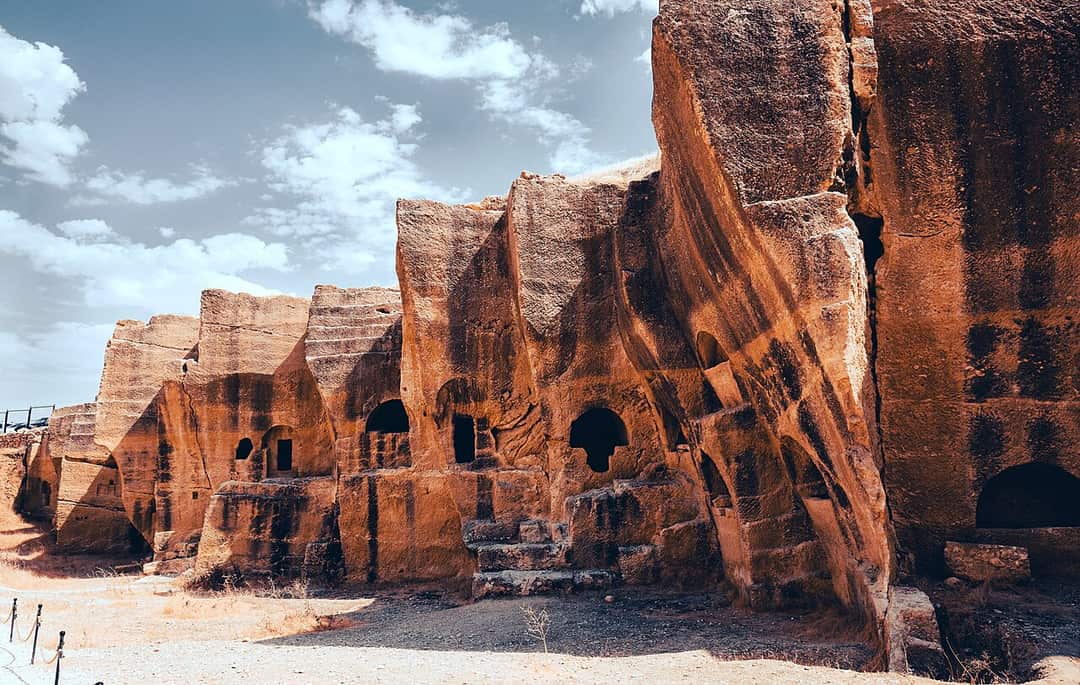
Southeast of Mardin the village of Oğuz sits inside the ruins of Dara, the fortress city the emperor Anastasius I built in 505 against Persian Nisibis, eighteen kilometres away. Justinian later raised the inner wall to about twenty metres, strengthened the towers, dug a moat and diverted a river through the town. What you walk through now is the great cisterns and the tombs cut into the rock. Khosrau I took the place after a siege in 573 and the Arabs in 639, after which it emptied. Go in the morning, before the stone heats.
Sources: en.wikipedia.org
Midyat, and silver drawn into wire
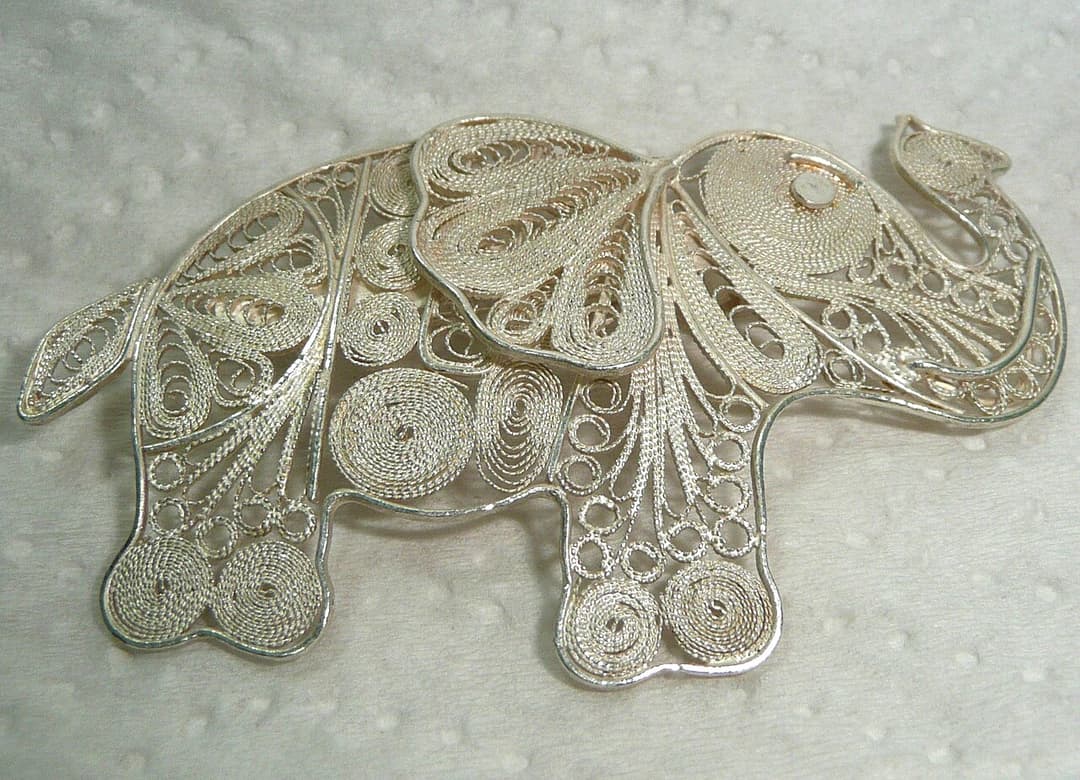
Midyat is Tur Abdin's capital and appears in Assyrian tablets of the ninth century BC as Matiate; Ashurnasirpal II stopped here for two nights in 879 BC. Five Syriac churches remain in the town, and the Guesthouse, built in 1850 by the Shabo family at the highest point, has become its emblem. The craft to look for is telkari, silver drawn into fine wire and soldered into pattern. The municipality opened a museum of it in December 2023, in a house of 1850 built by the Gelle Hirmız family. Buy from a workshop where someone is working, not from a display case.
Sources: en.wikipedia.org · en.wikipedia.org
Tips
Start at the top and walk down
Mardin's airport is about twenty kilometres southwest of the old town, and the newer districts sit on lower ground to the northwest; the historic quarter is the slope between them. It is walked, not driven, and it works as one long street with stairs and abbaras dropping away on the downhill side. Begin near the citadel and work down rather than the other way round. Save your places on an offline map first, because the lanes do not go where a straight line suggests.
Sources: en.wikipedia.org · mardin.ktb.gov.tr
Pick your season
This is a hot-summer Mediterranean climate on the lip of a plain. July averages a daily high of 35.9°C and the record is 42.5°C, set on 31 July 2000; January averages 6.7°C by day, with rain and sometimes snow. The city takes about 610 mm of rain and close to 3,000 hours of sun a year. Spring and autumn are the walking seasons. If you do come in summer, take the slope early and keep the terraces for after dark.
Sources: en.wikipedia.org
Getting online
Mobile data earns its keep here. The lanes of the old town defeat most paper maps, the monasteries and Dara are outside the city, and buses and shared taxis are easier to work out with an app. A Roamy eSIM for Türkiye can be installed before you leave and switched on when you land. Download an offline map of the old town as well, for the stretches where the walls take the signal.
Sources: en.wikipedia.org